Dyeing with natural Turmeric and Indigo
Dyeing with natural colour pigments is no simple undertaking – and that is precisely what makes it so fascinating.
The correct and most ecological preparation of the pigments is often accompanied by the preparation of the material to be dyed. What is important here: the chosen colours should be as lightfast and wash-resistant as possible – meaning they should neither fade quickly nor lose intensity when washed.
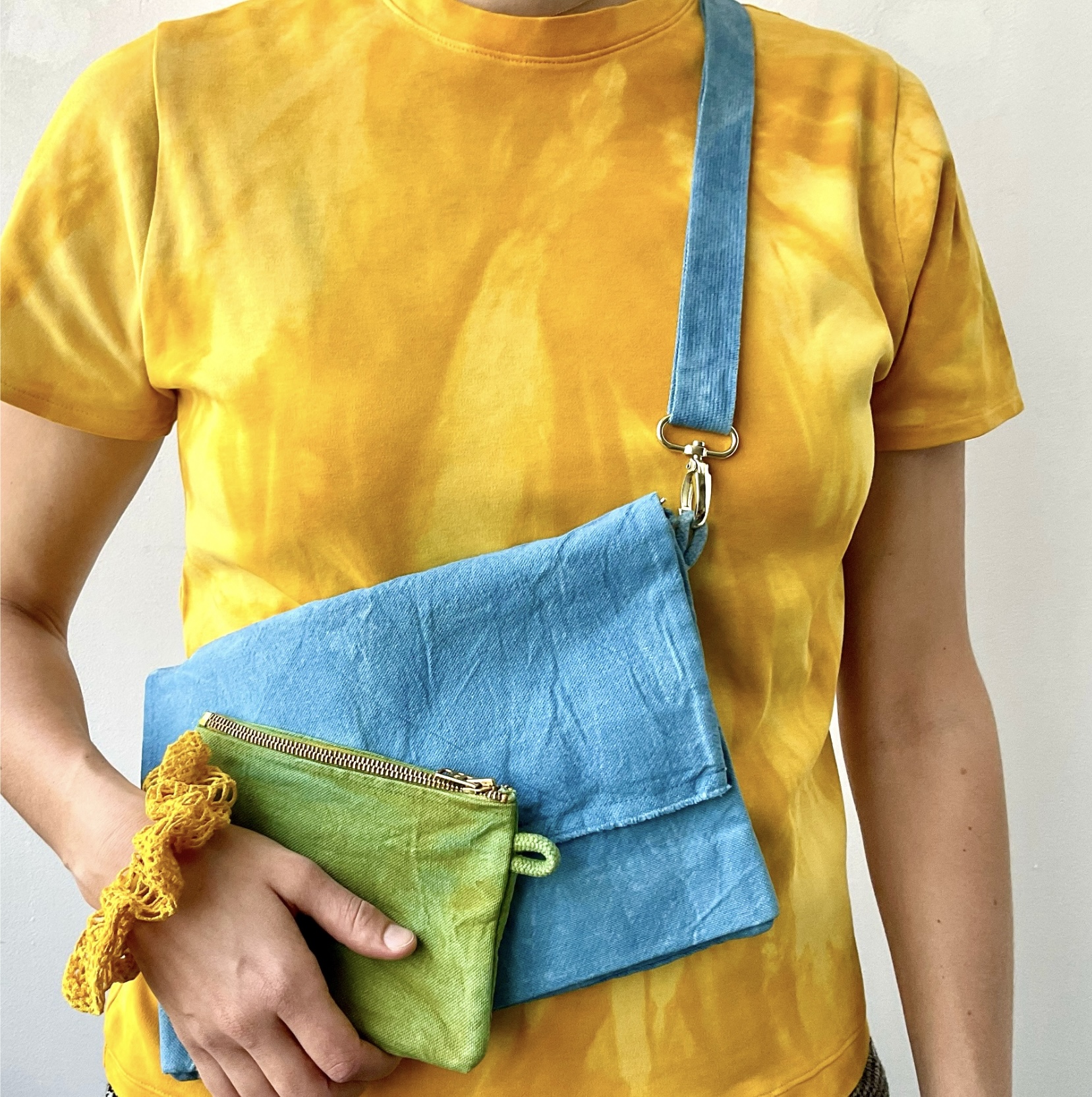
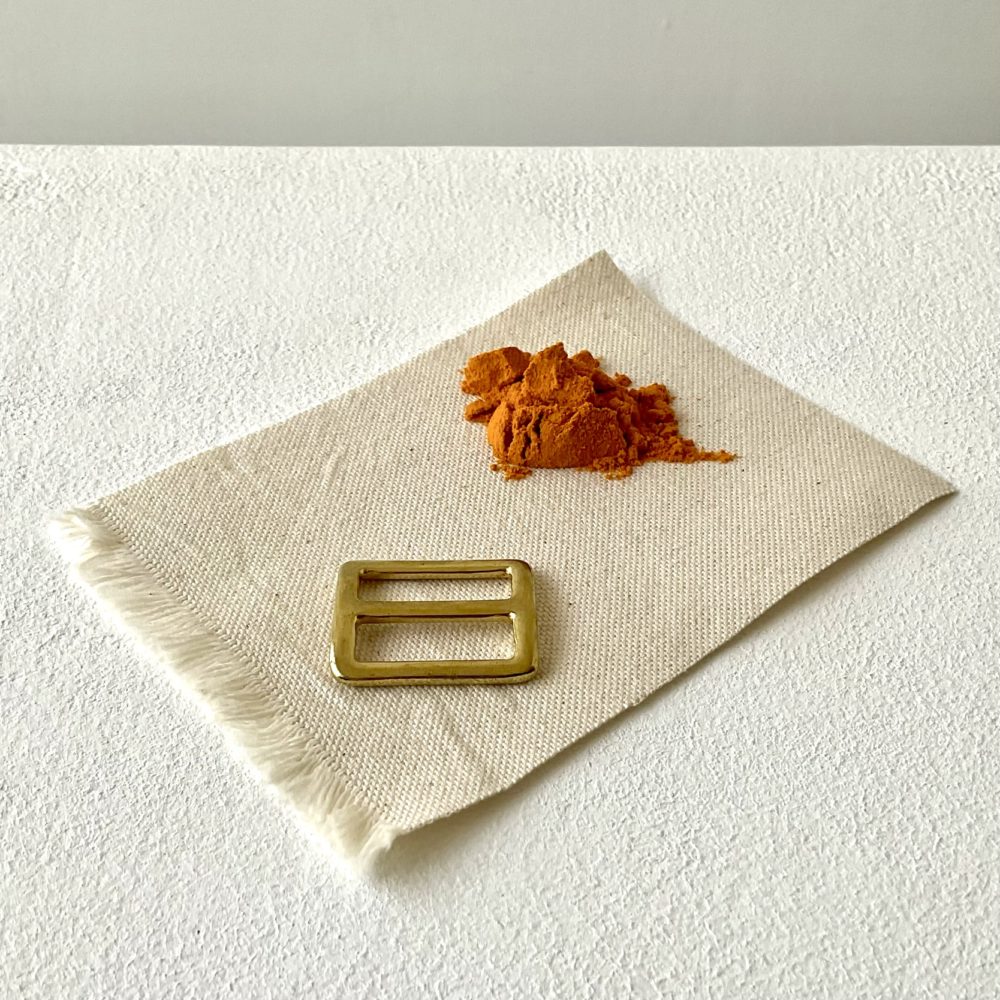
Two of the few natural plant-based colour pigments that meet these criteria when dyeing plant-based fibres are Turmeric and Indigo. With both I have been able to achieve wonderful results – and for my plastic-free dyed creations. I needed no more than three ingredients: unbleached and undyed cotton, metal and plant-based colour pigments.
Turmeric
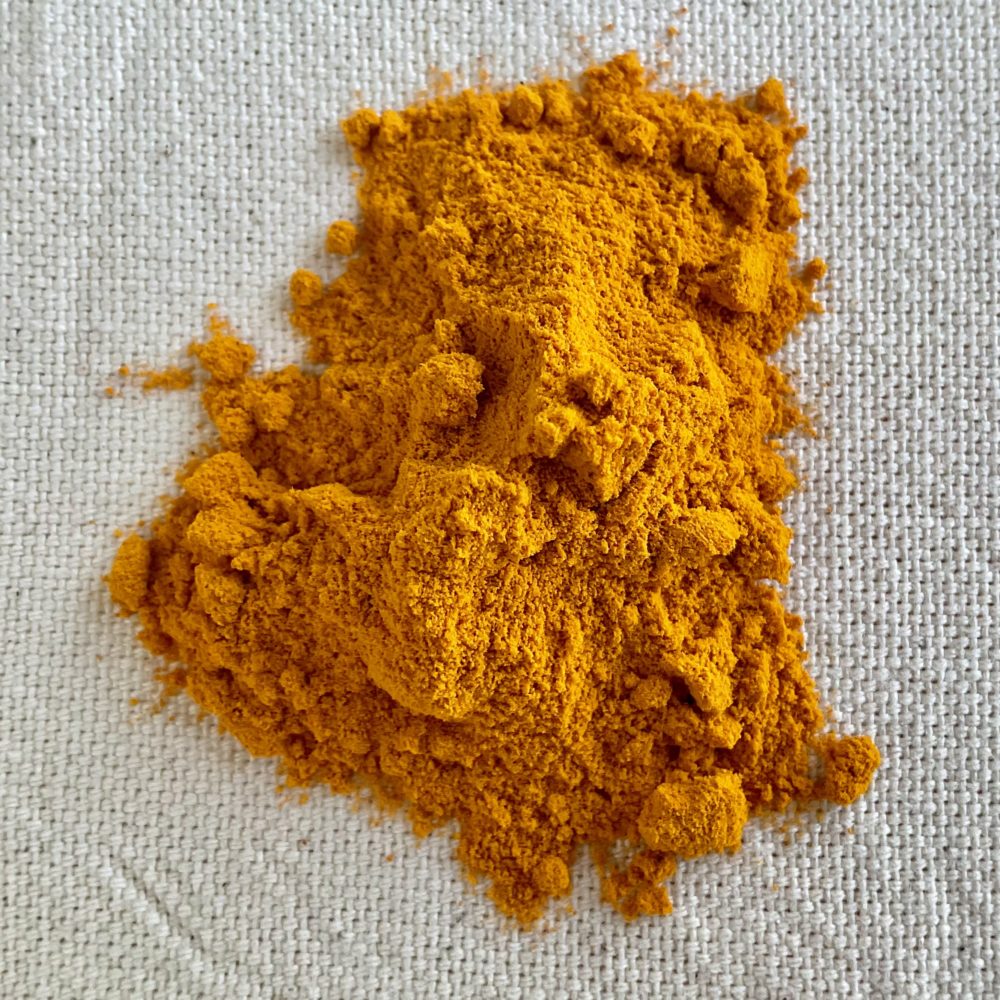
Turmeric – also known as curcuma, yellow ginger,
saffron root or golden root – is a plant species from the ginger family (Zingiberaceae). It originates from South Asia but is now cultivated worldwide – even in Austria.
The rhizome is very similar to that of ginger, but
intensely yellow. Turmeric can be used fresh or dried
as a spice, remedy and dye – for digestion, to strengthen the immune system and to prevent infections. Until the 20th century it was regularly used to dye fabrics, paper, varnishes and ointments. Since then synthetic pigments have dominated – which is a shame, as the natural variant has so much more character.
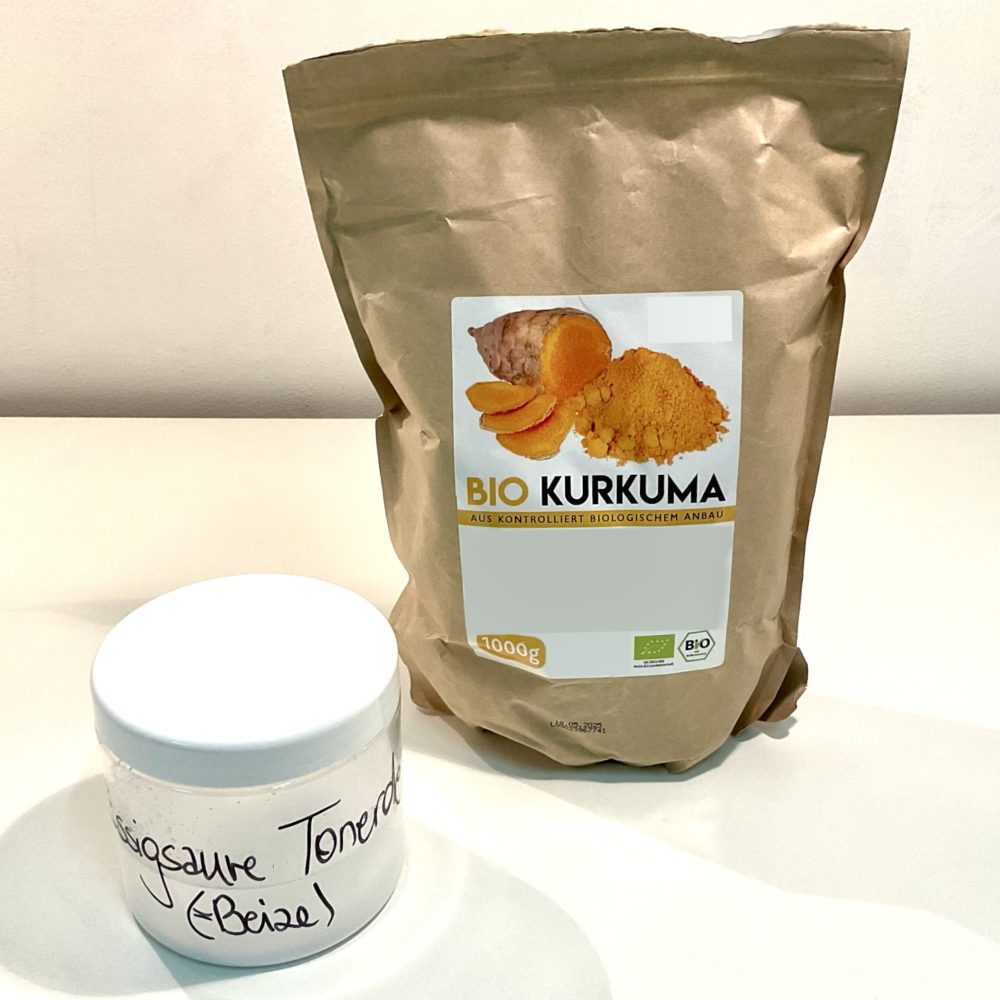
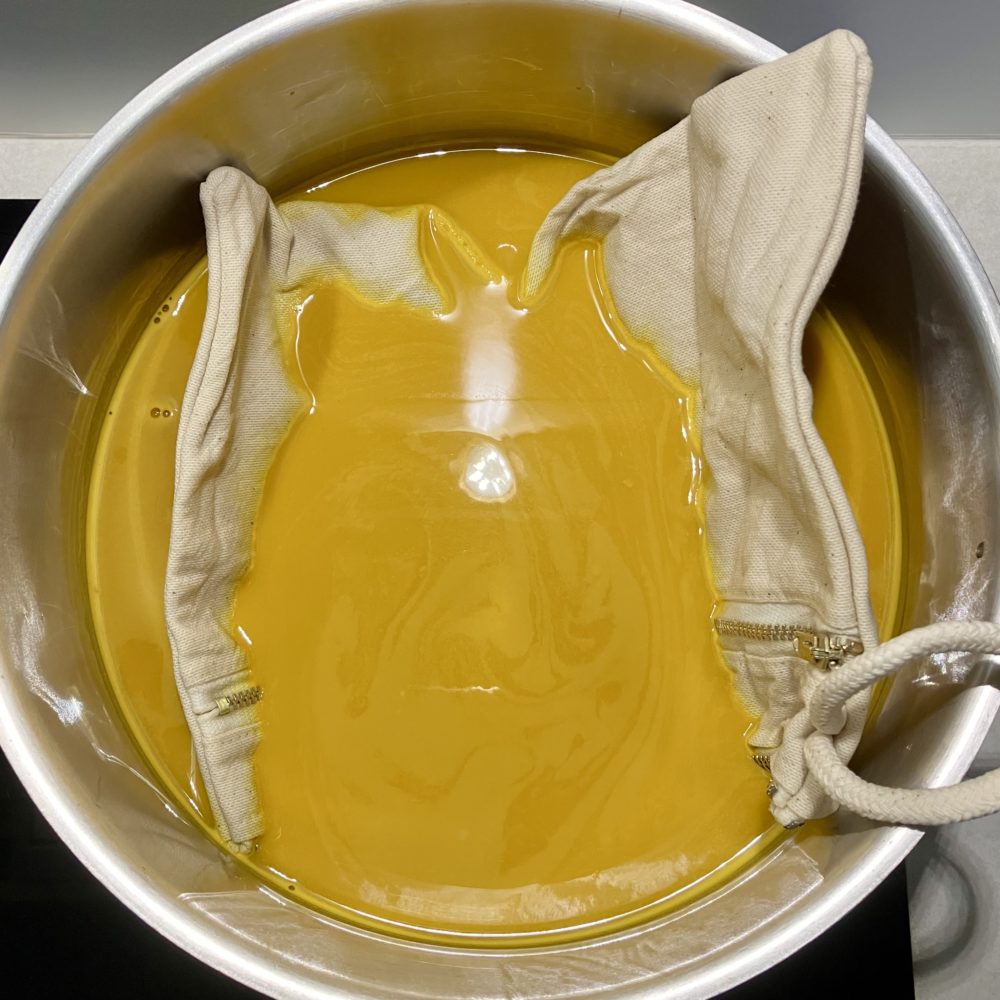
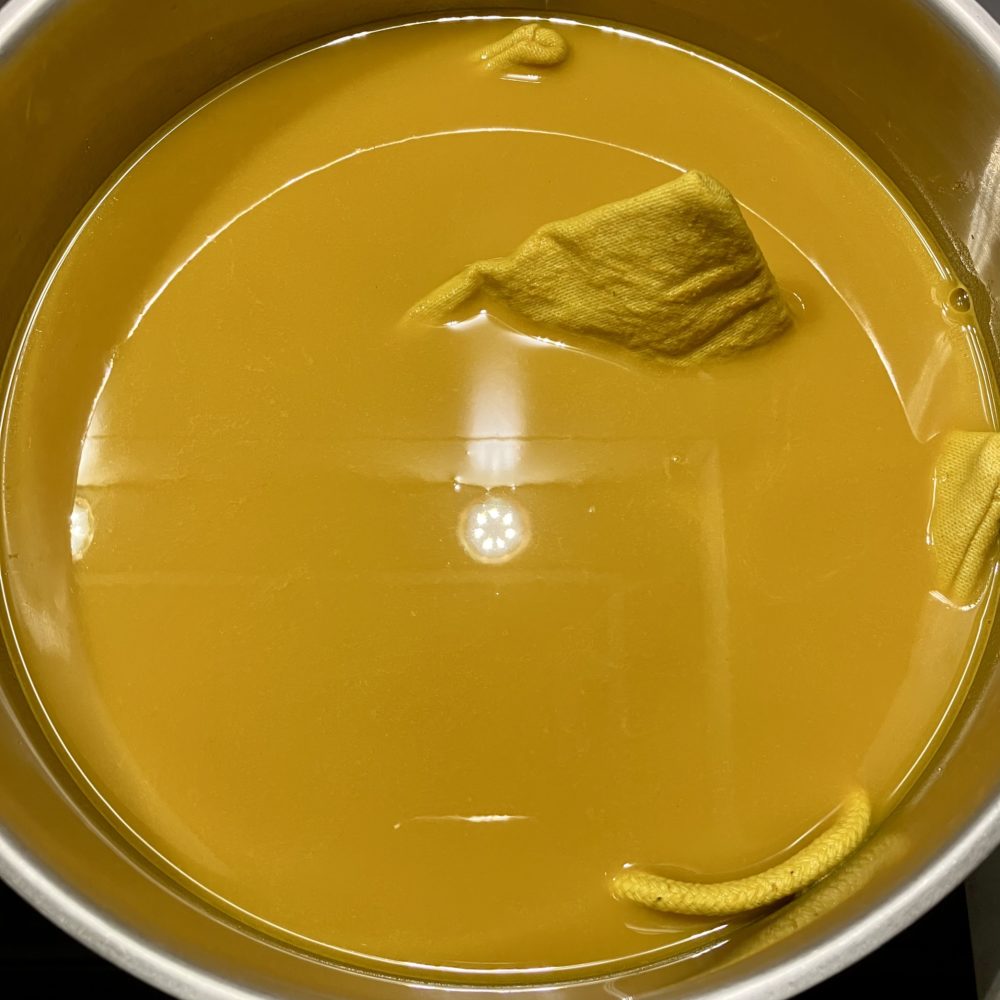
For dyeing with turmeric only four things are needed: mordant, turmeric, water – and patience.
The textile is first placed in the mordant for at least
12 hours, then rinsed and subsequently dyed in a warm turmeric bath for at least one hour. The subsequent oxidation in the air helps to fix the colour. Once dry, the dyed material can be washed normally in the washing machine – and is then fully ready to use.
Indigo
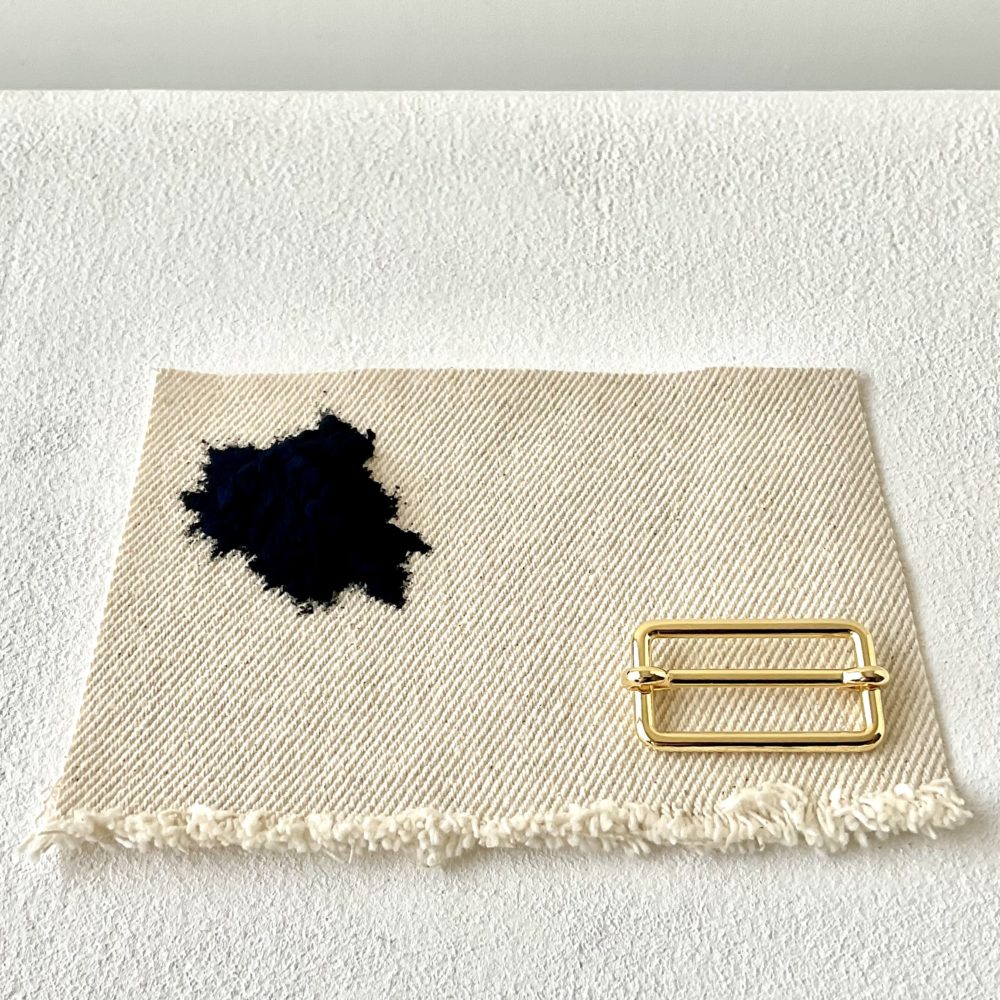
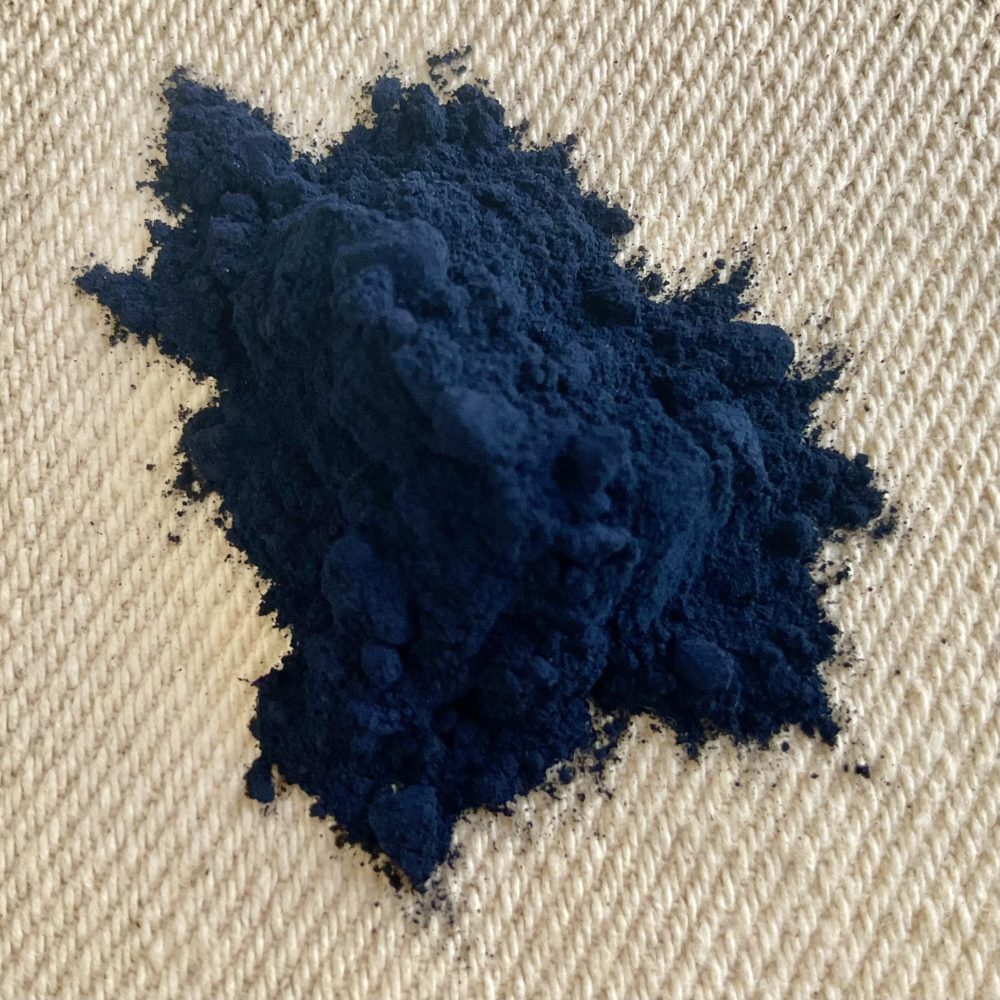
Indigo – from the ancient Greek word indikón, the Indian – is one of the oldest and most well-known pigments in the world. It was already used to dye textiles in prehistoric times.
The organic pigment impresses with its very high colour strength, lightfastness and wash-resistance. In the past, indigo was obtained exclusively from plants – such as the leaves of woad or the indigo plant. At the end of the 19th century the industrial development of synthetic indigo began, which gradually displaced the natural variety. Today indigo is used primarily in vat dyeing – as well as in blue printing and as Pencil Blue.
The textile does not need to be pre-treated – but the
indigo itself requires a little more preparation than turmeric. It must first be „reduced" in order to make
it water-soluble.
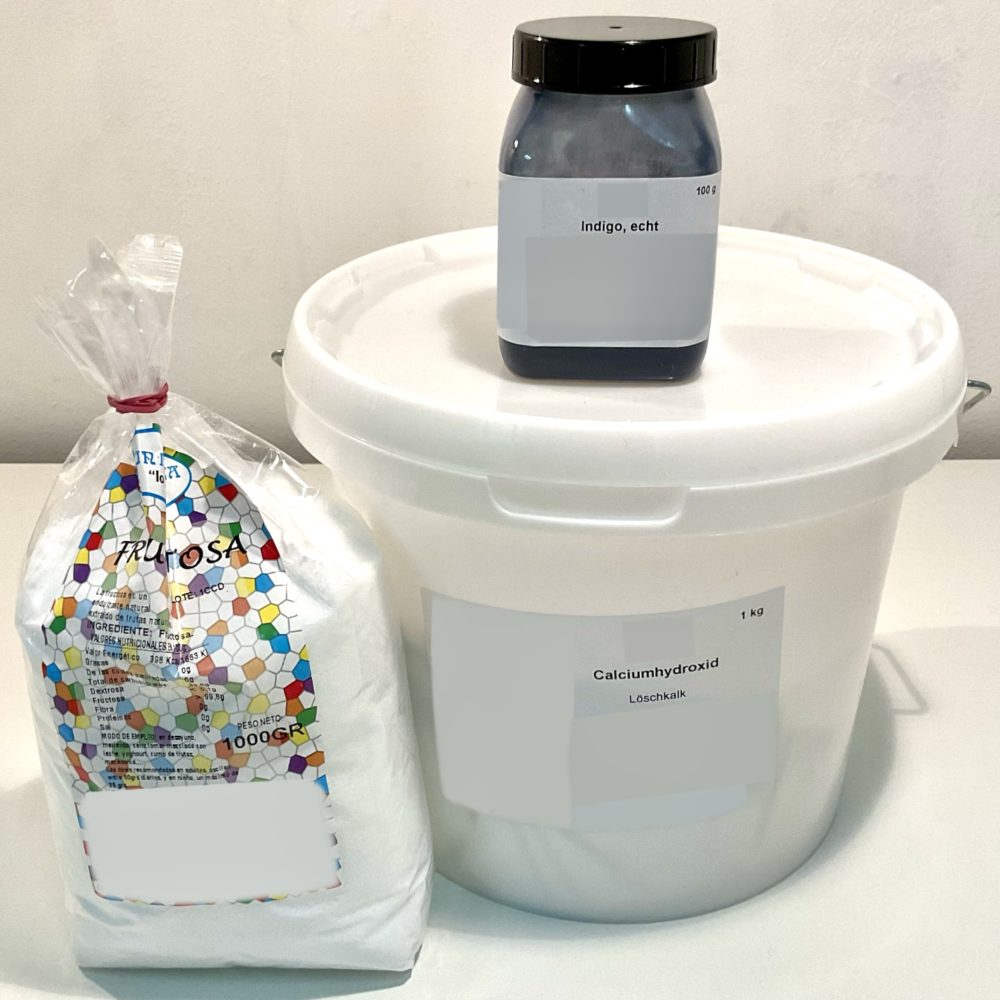
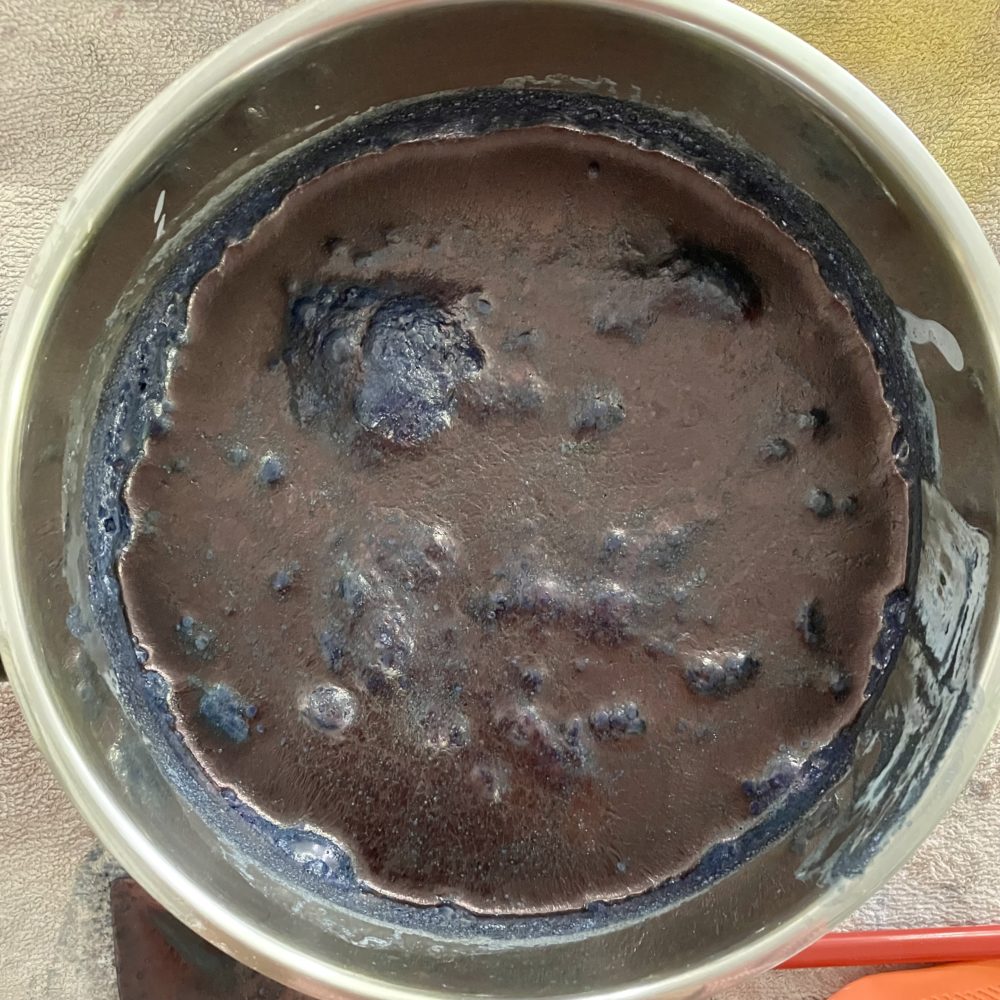
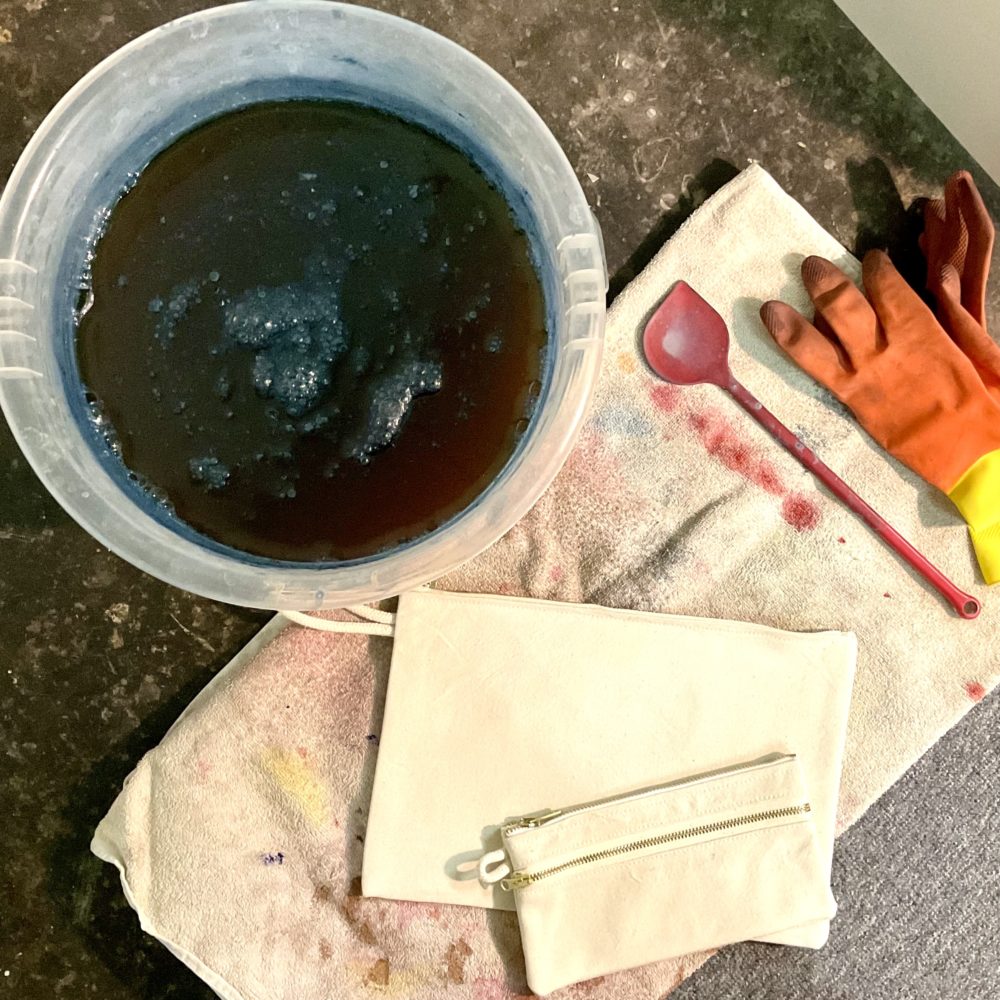
To do this, a stock vat is prepared: with pigment, water, fructose and calcium hydroxide. After it has matured, the stock vat is topped up with water and must mature again. The maturity is recognised by the characteristic copper shimmer and the blue „indigo bloom" on the surface – a truly beautiful moment.
The textile can be dipped into the vat several times –
the more often, the more intense the colour. The vat
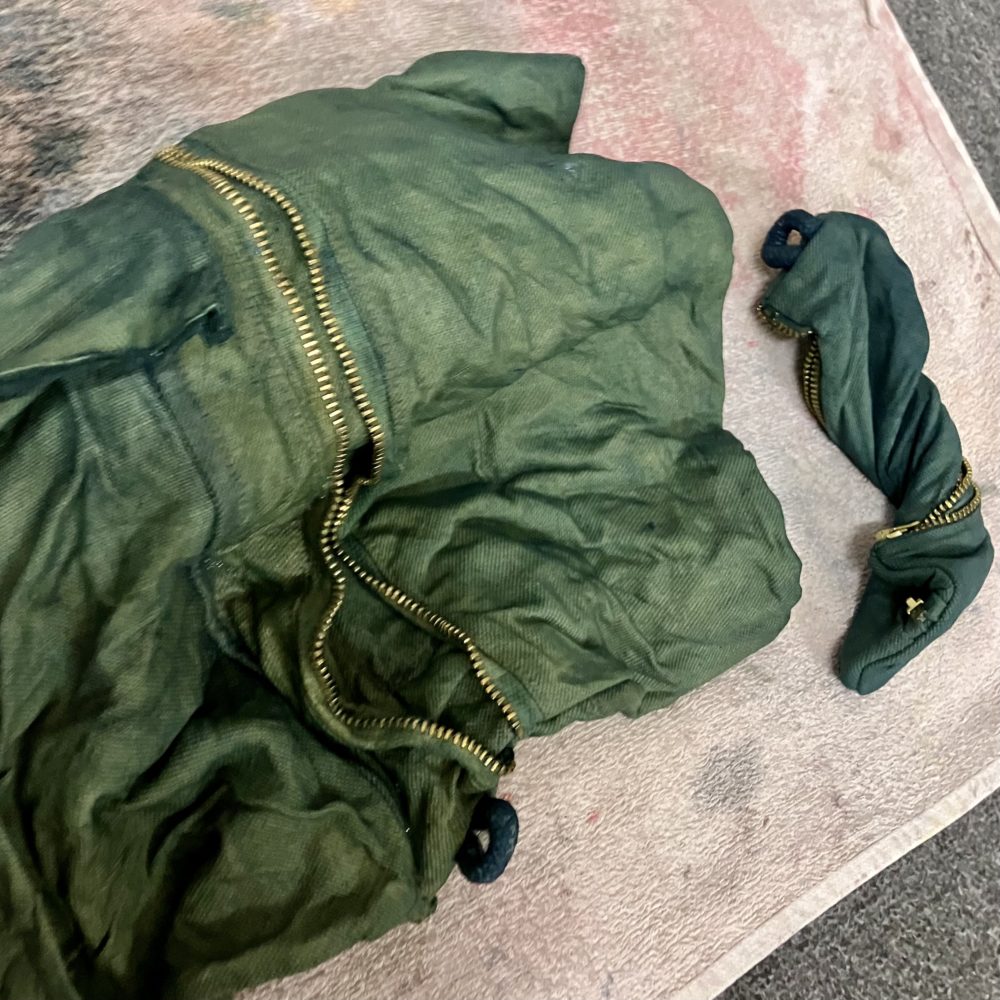
itself varies in colour between reddish brown and dark green; the dyed fabric initially appears greenish in the liquid and only turns blue in the air through oxidation. Watching this moment is magical every single time.
After air-drying, the dyed material is rinsed with
vinegar – to lower the pH value from approx. 12 to 6 – and then washed in the washing machine. Done!
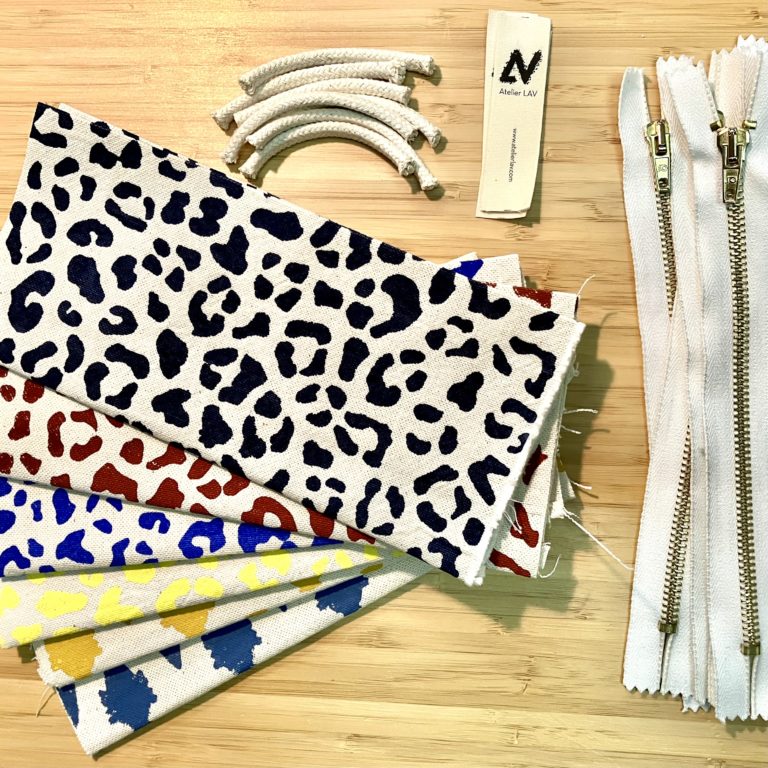
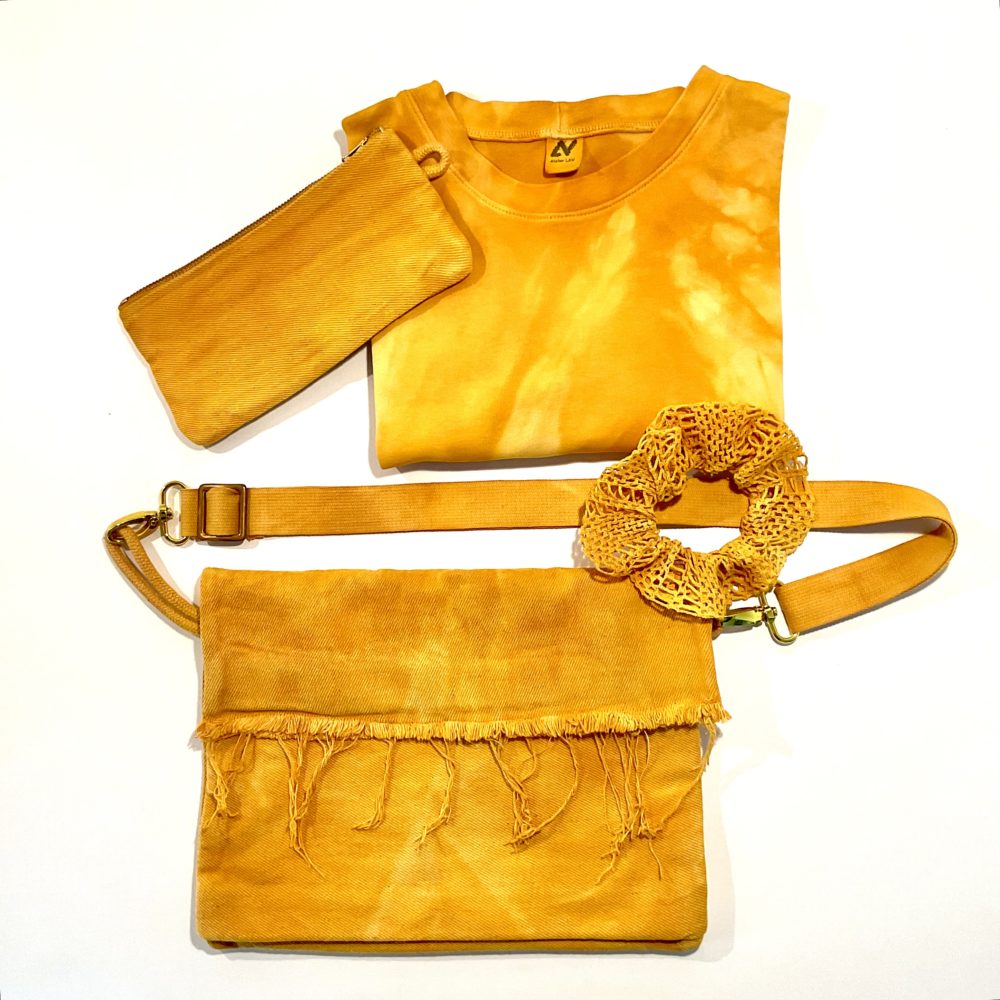
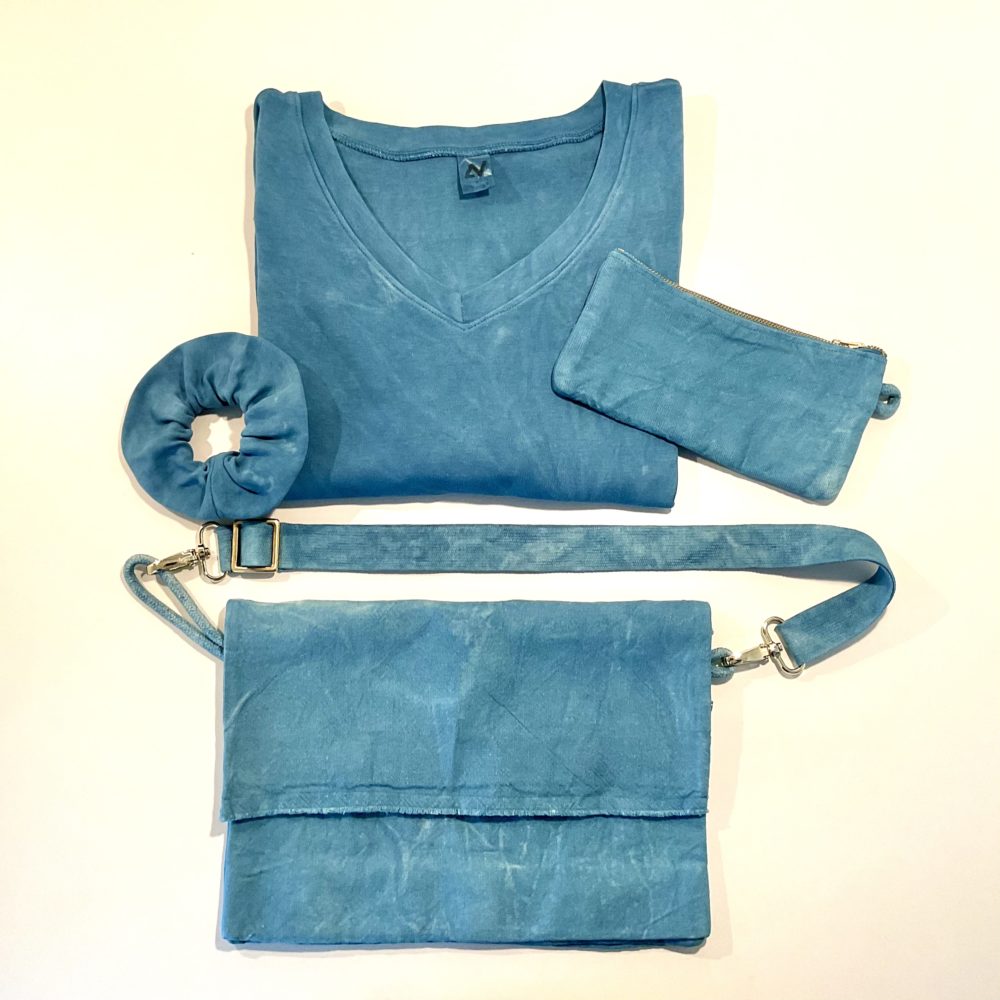
The pieces dyed with turmeric and indigo can be found in my plastic-free creations: