
Across all the artistic works of this project spans a fascination with three special living beings: the artichoke, the lichen and the lion's mane mushroom.
Three often underestimated superfoods that flourish here in Austria – and at the same time three aesthetically outstanding representatives of their kind: plant, fungus, lichen.
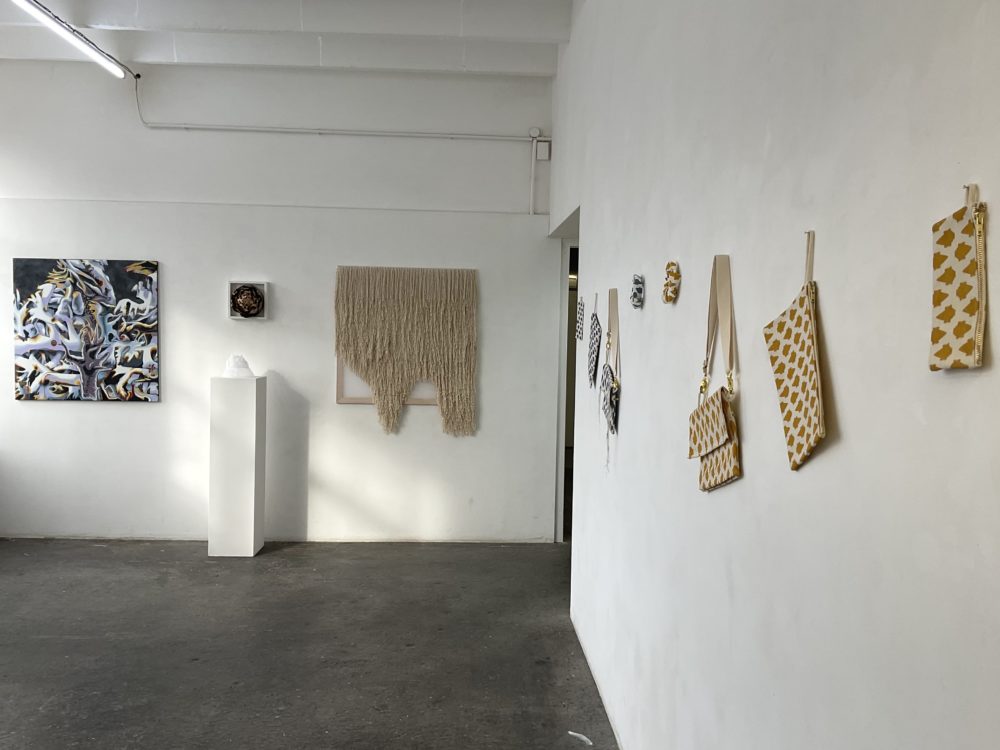
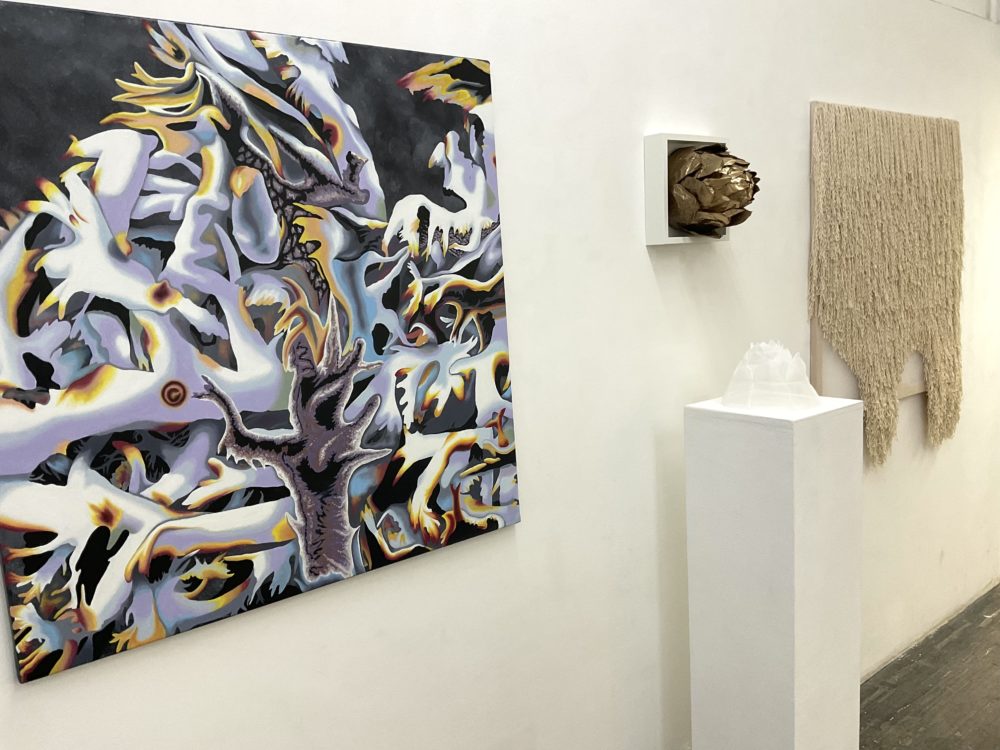
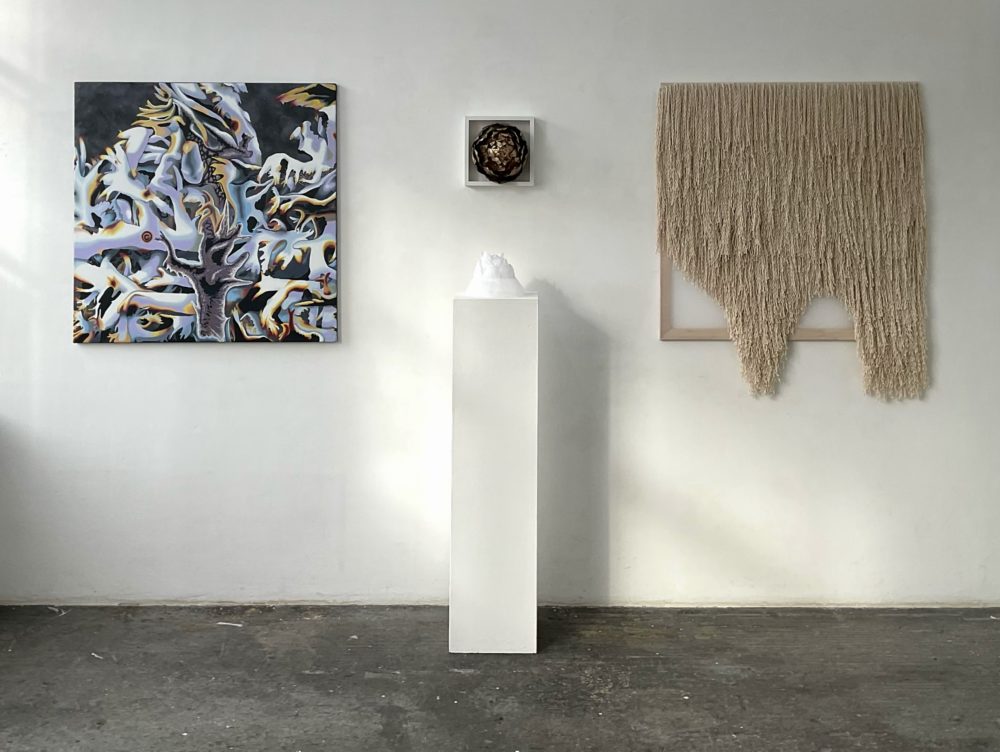
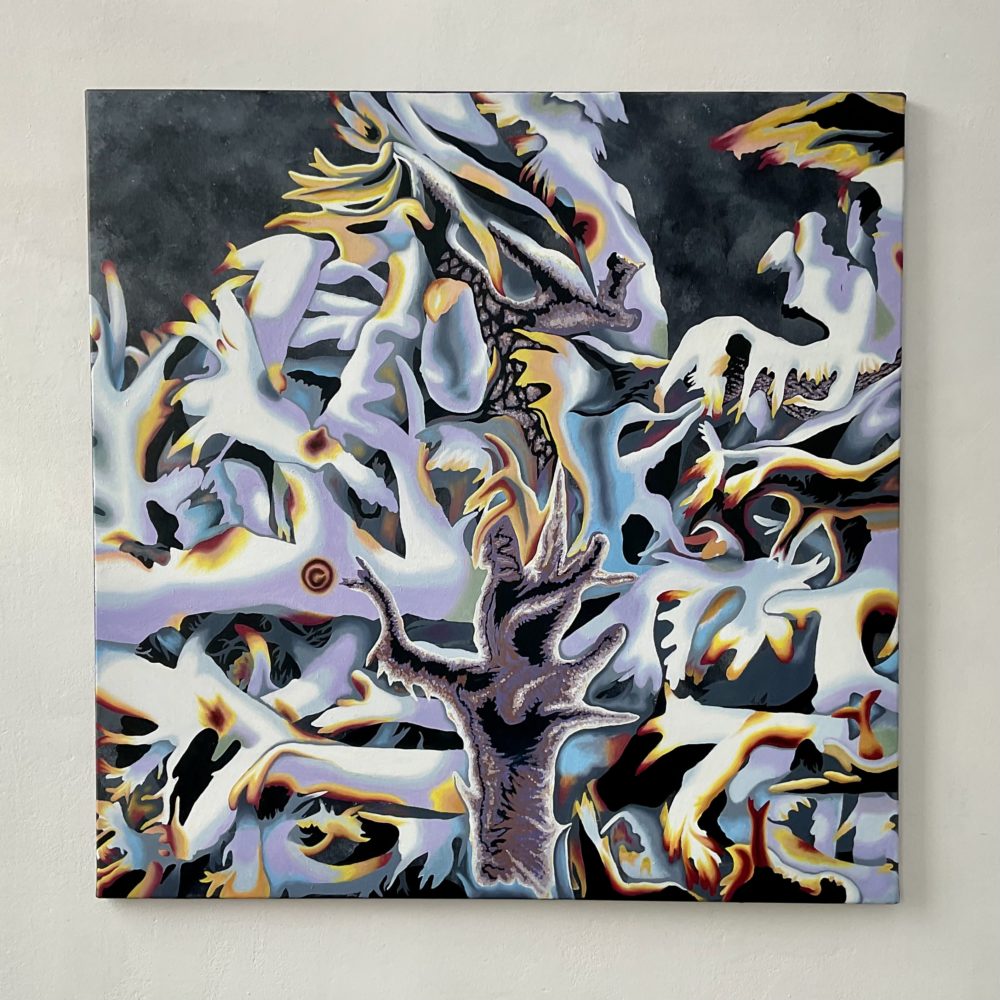
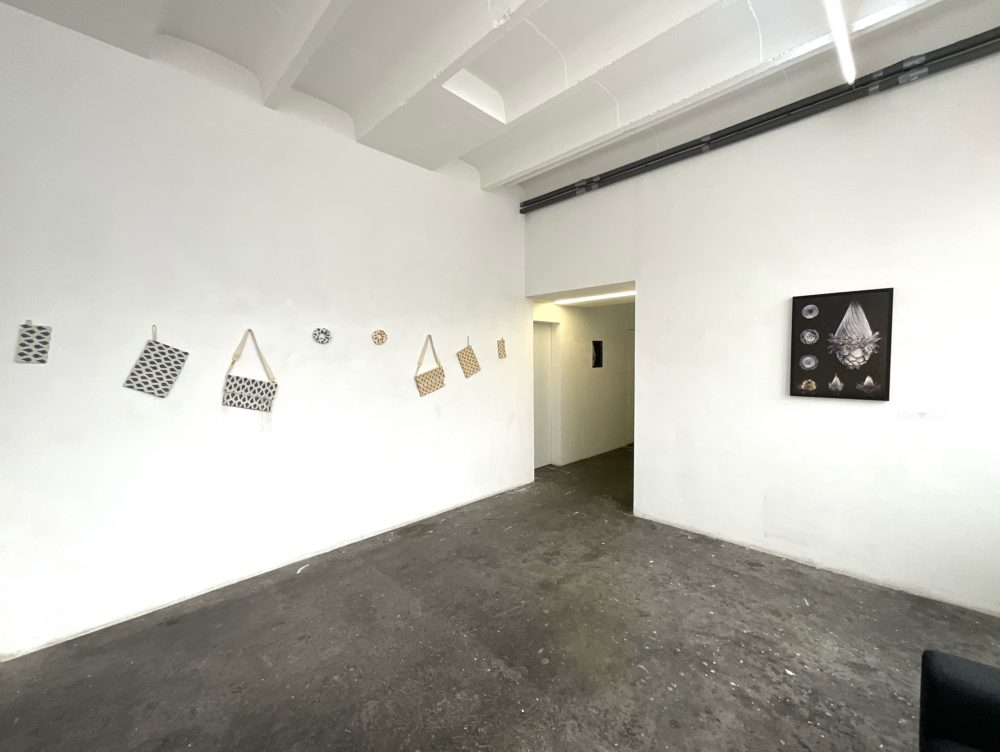
The opening work is the DISCO LICHEN – oil and acrylic on canvas, presenting itself
in saturated form as an intense close-up.
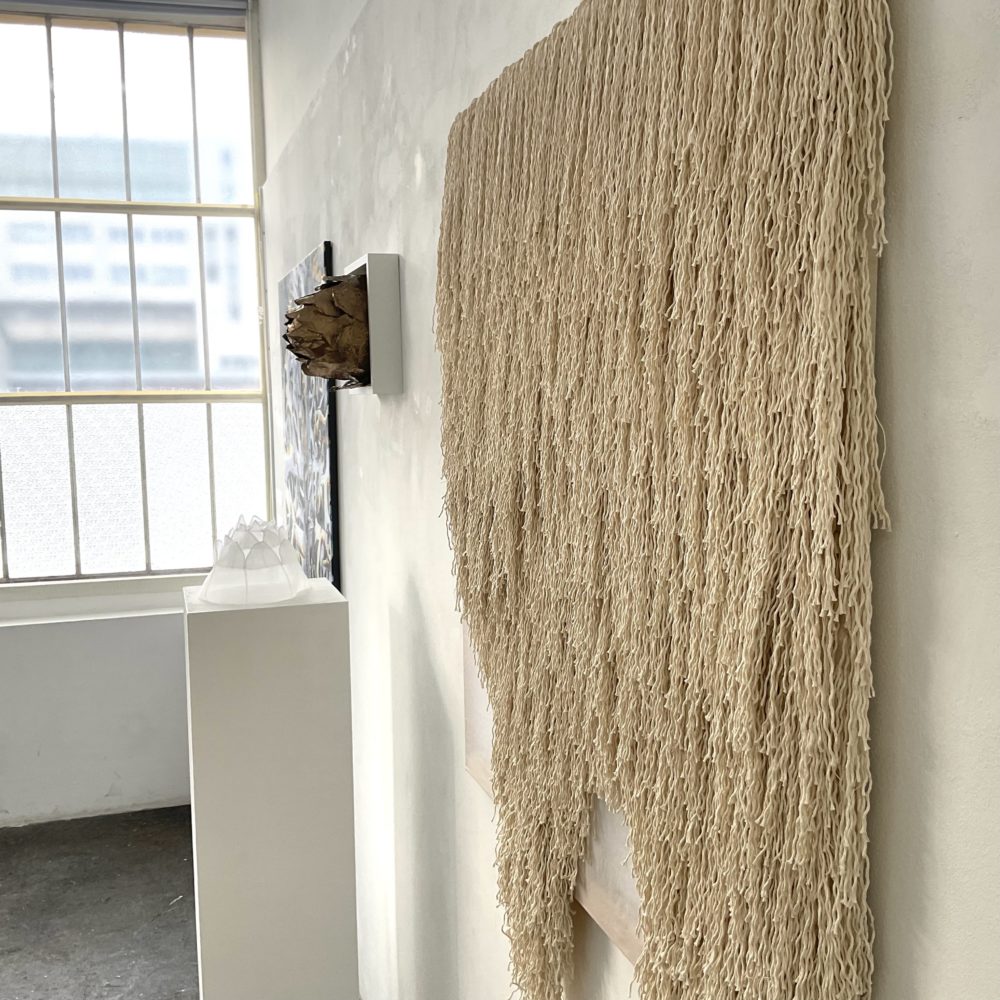
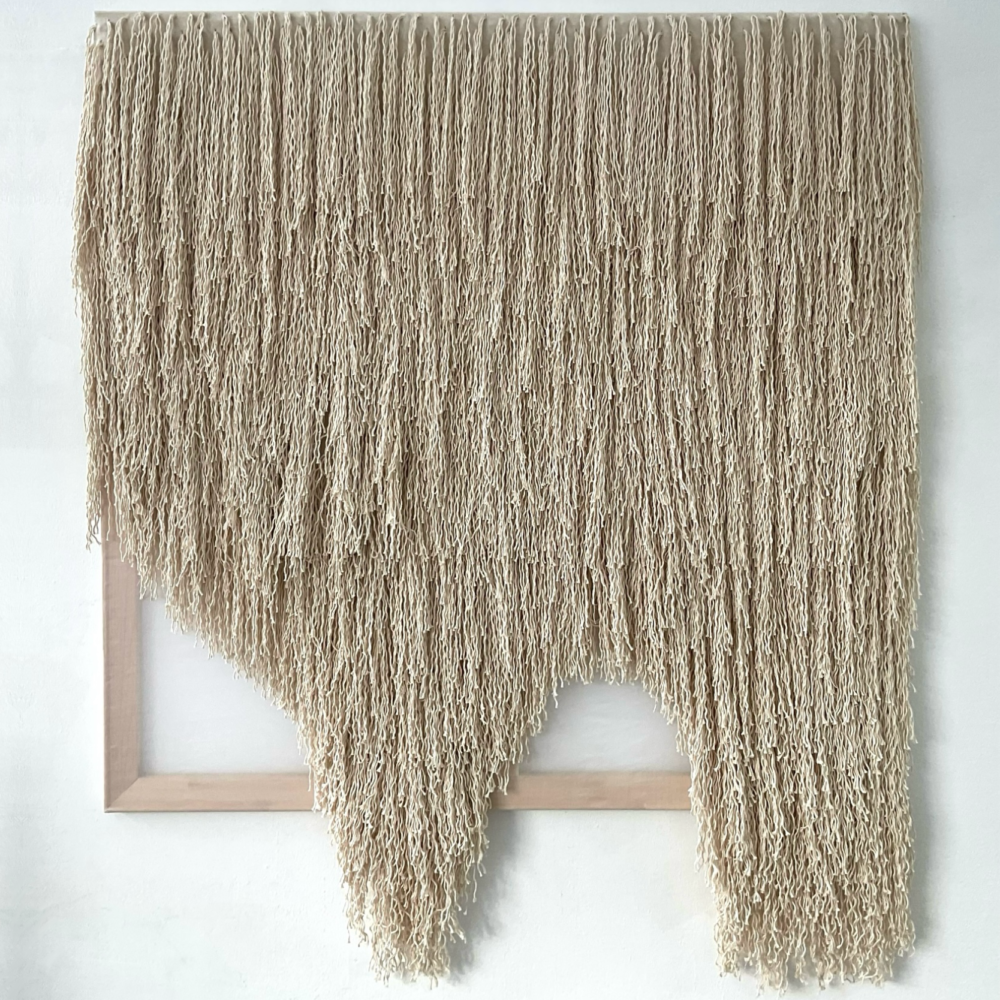
Alongside stands the HEDGEHOG BEARD: a large-format textile picture made from over 750 metres of untreated cotton thread and a little organdy.
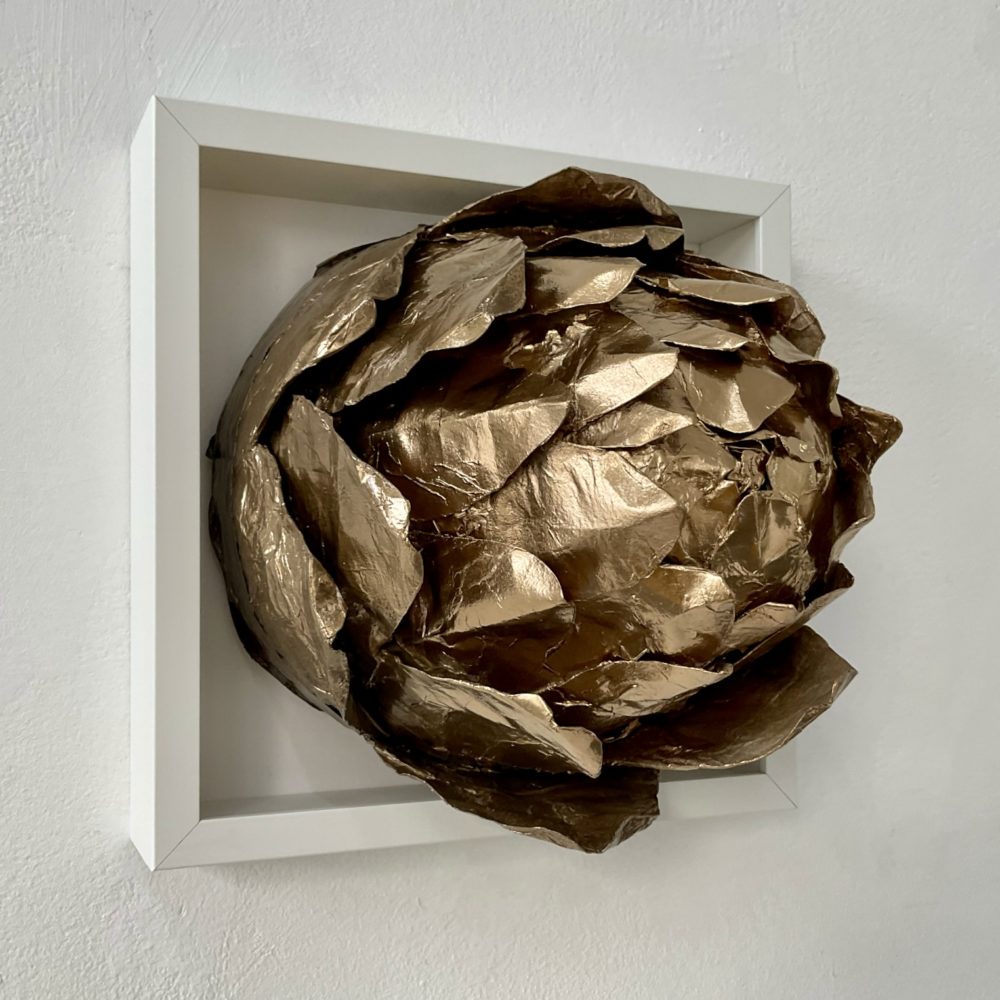
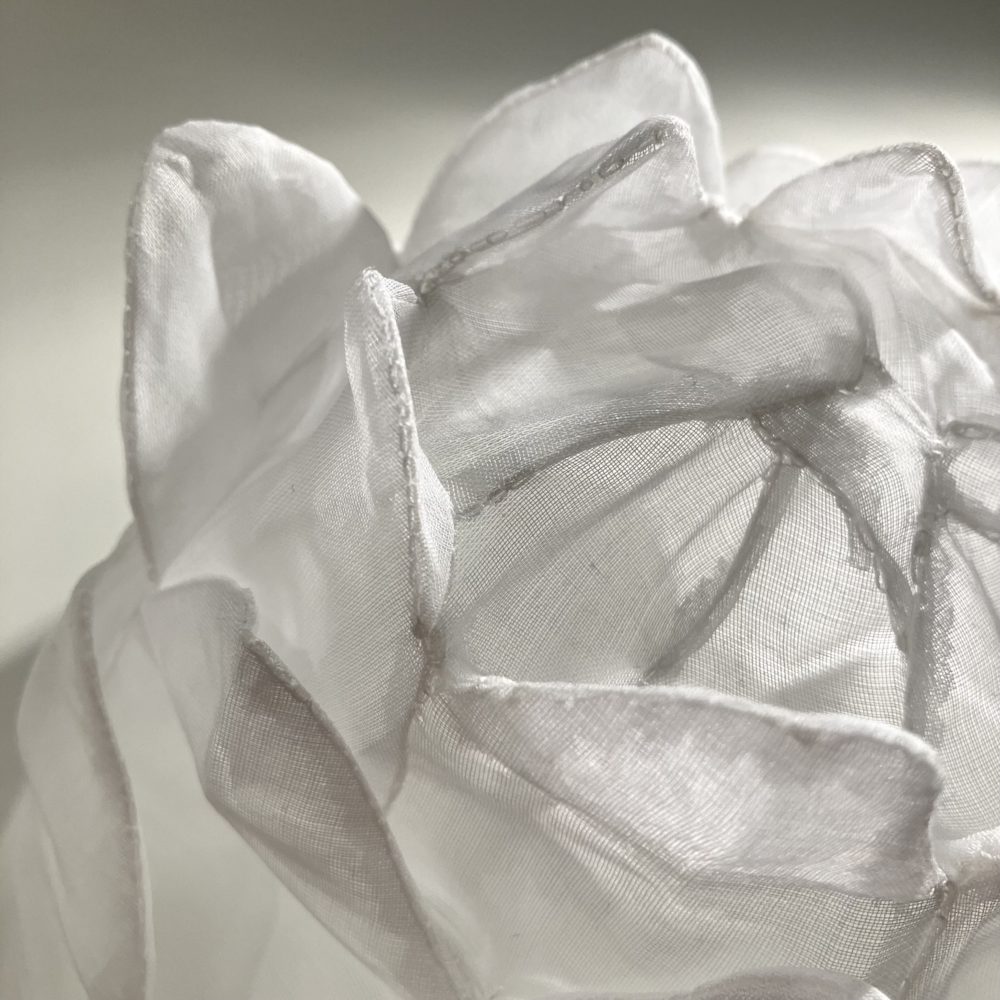
With the ARTICHOKE CROWN and the ARTICHOKE BRIDE the visual works of Atelier LAV culminate in a duo
of objects that pay homage to the magnificent artichoke in gold and organdy.
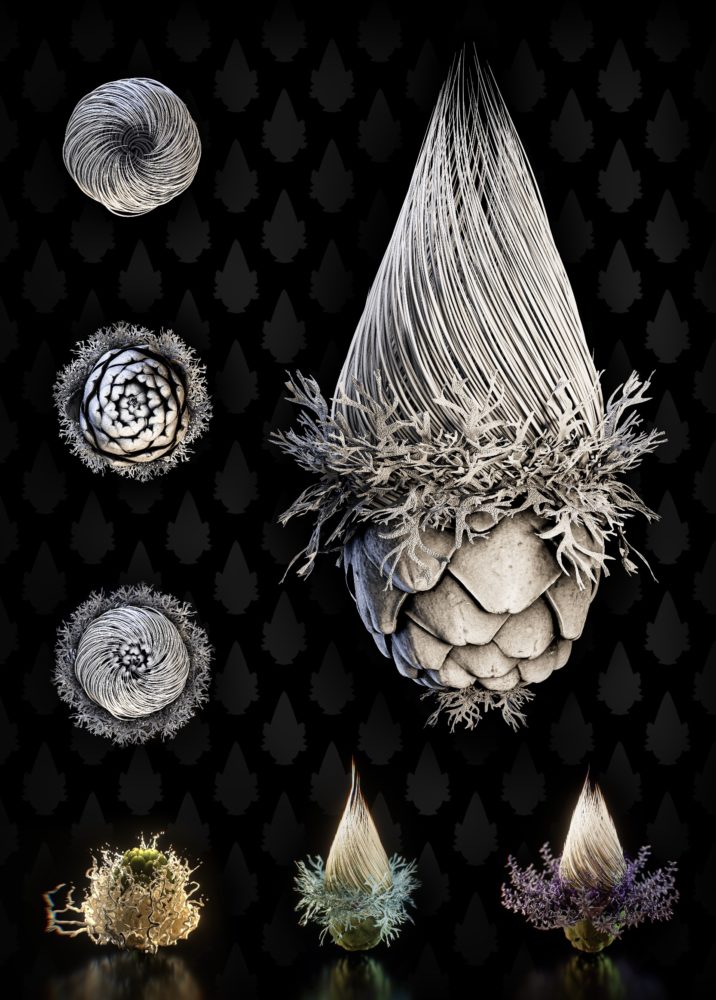
The central work of the exhibition: the ARTILICHEN.
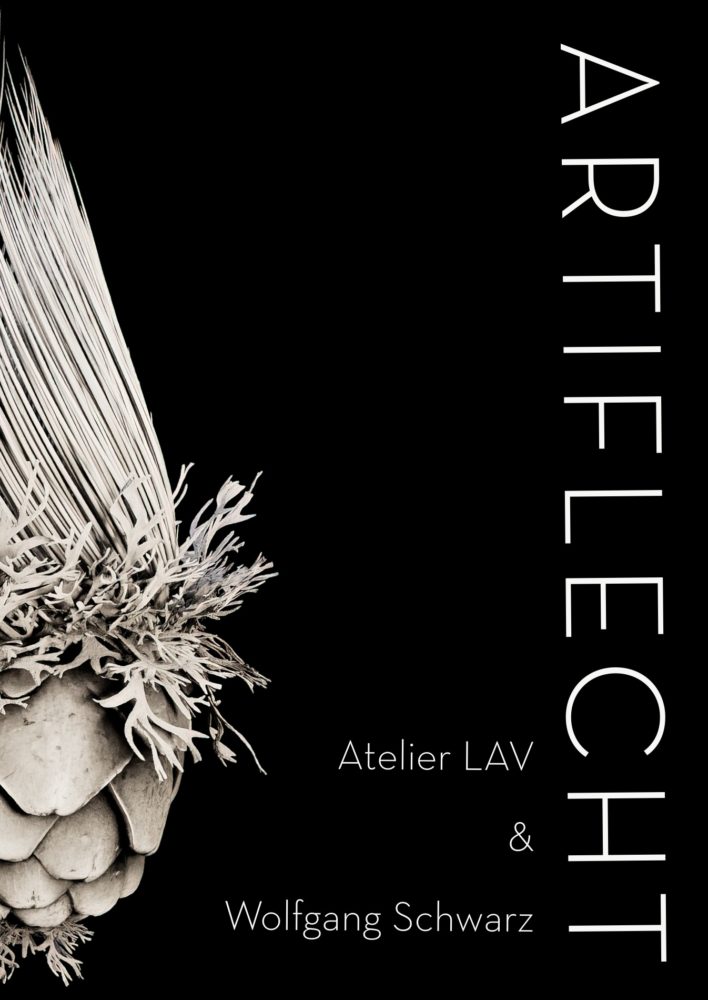
A new organic form – a mixture of all three organisms explored in this project. This creation reflects the increasing artificial production of organic materials: whether digitally through AI or analogously through genetic engineering.
Wolfgang Schwarz created the new organism as a 3D object in Cinema 4D. With several renderings he stages the new form in the manner of traditional scientific illustrations – such as those of Ernst Haeckel.
As a transition into the applied sphere, Atelier LAV
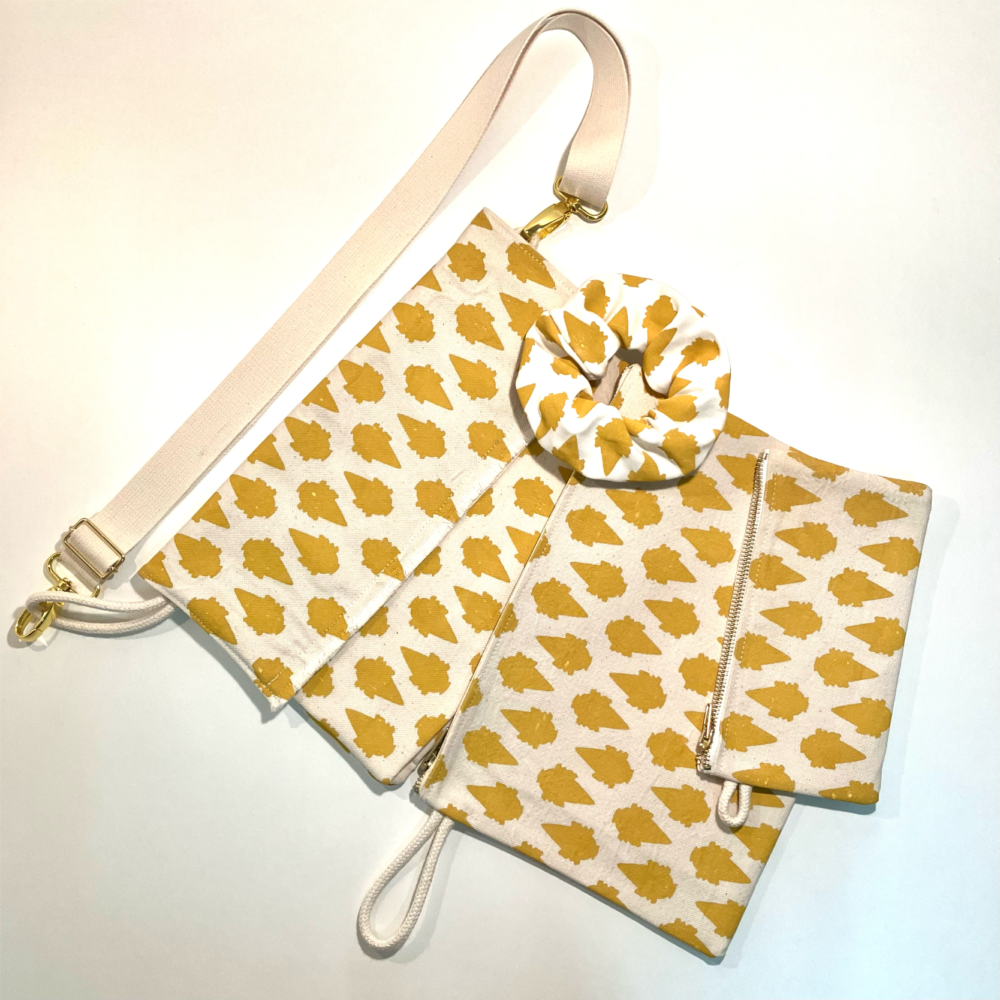
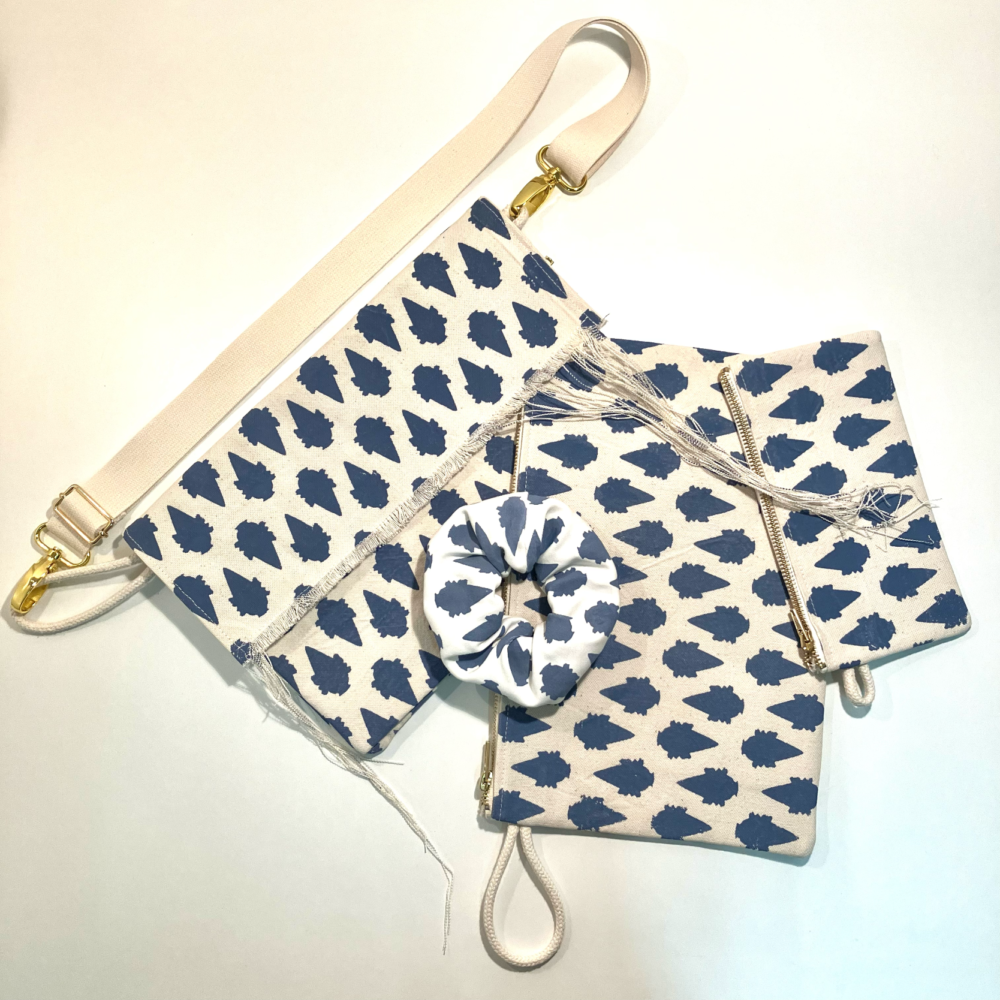
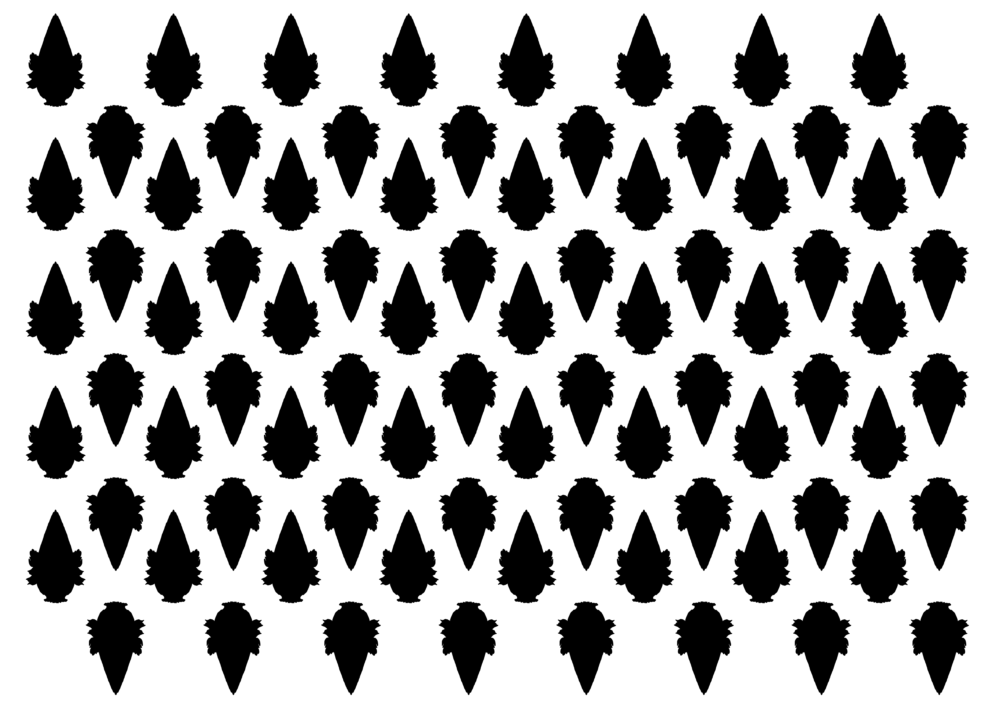
created special unique textile pieces from a repeat pattern of the ARTIFLECHT.
The repeat pattern was printed via screen printing onto unbleached and undyed organic cotton fabric – with pure natural colours: turmeric yellow and indigo blue, representative of the natural dyeing process with turmeric and indigo.
The textile pieces were created completely plastic-free from a maximum of three materials: untreated organic cotton, metal, natural dyes.
The finished textile works close the circle: from the
original fine art idea grew a new organic form –
from which in turn handmade, fairly produced
unique pieces came into being.
Textile, wearable works of art.
From purely organic materials.
2024
oil and acrylic on canvas / textile picture from thread
embroidery & patchwork / textile organdy object /
papier-mâché sculpture / digital 3D object on poster
print / textile accessories
oil · acrylic · canvas · natural-coloured organic
cotton yarn · organdy · papier-mâché · digital object ·
poster · natural dye · brass
Collaboration with Wolfgang Schwarz
Exhibition in the presentation room of Ateliers 33/2, Vienna
About the ARTICHOKE:
Artichokes (Cynara) are a genus of plants in the Asteraceae family. They are thistle-like, robust, herbaceous plants, which can be annual or perennial, reaching heights of 50 to 250 cm. The leaves are compound and have a spiny margin. The large, basket-shaped flower heads contain only tubular flowers. The numerous bracts are arranged in five to more than eight rows. The radially symmetrical tubular flowers are white, pink, or violet. The fruits are achenes, with more or less functional, parachute-like pappus consisting of three to seven rows of hairs fused at their base.
The most well-known species is Cynara cardunculus L., from which the two vegetable groups, artichoke and cardoon, have originated.
Artichokes are used as food and medicine. Besides the fleshy lower parts of the bracts, the bracts themselves (known as artichoke hearts) are also eaten. Smaller varieties of artichokes, harvested early, and the spineless Roman artichoke (Carciofo Romanesco) can be eaten whole.
Artichoke is rich in vitamins (B9, C, K, and other B vitamins). As a medicinal plant, it has an appetizing, digestive, and cholesterol-lowering effect. It contains cynarin, a bitter substance that stimulates liver metabolism. It contains polyphenols, flavonoids, caffeic acid derivatives, thereby improving sugar and fat metabolism. The cardiovascular and metabolic systems are also positively influenced by the artichoke. It activates and forms mitochondria, significantly improving overall health, quality of life, and well-being.
About the BEARDED HEDGEHOG:
Bearded Hedgehog (Hericium erinaceus), also known as monkey head mushroom and lion‘s mane, is a species of fungus in the order of agarics. The fruit body is beige, sometimes slightly reddish, and can reach sizes of up to 30 cm. The mushrooms are usually short-stemmed and 10 to 25 cm thick. The upper surface is fibrously torn. Soft, densely packed spines measuring 2 to 5 cm in length and 1.5 to 2 mm in thickness are found on the underside; their surface is frosted. The flesh is whitish and has a tough, somewhat fibrous texture. The spore powder is white.
Bearded Hedgehog is a widely distributed but rare fungus. It grows as a wound parasite on older deciduous trees (oaks, beeches) and prefers forests with high humidity.
The fungus contains an above-average amount of essential free amino acids (about 19%) and almost all that are necessary for humans. Traditionally (especially in TCM), it is used as a remedy for stomach and respiratory problems, nervous disorders, high cholesterol, cancer, and a weakened immune system. It also enhances cognitive functions in cases of dementia.
About the LICHEN:
Lichen is a symbiotic association between one or more fungi (mycobionts) and one or more partners capable of converting light into chemical energy through photosynthesis (photobionts) – usually green algae or cyanobacteria (phycobionts or cyanobionts).
The characteristics of lichens are distinct from those of the organisms they compose. The typical growth forms of lichens emerge only in symbiosis, and therein they produce characteristic lichen acids.
There are over 25,000 known species of lichen worldwide. They are usually named after the fungus that forms them, as it is often the fungus that gives them their form and structure. In biological taxonomy, lichens are classified under fungi.
Lichens often serve as food and medicine. Many of them contain a wide variety of substances. For example, Iceland moss is used for coughs, oak moss as an antibiotic, and polysaccharides as anticancer agents. A specific lichen species (Dictyonema huaorani) is used by the Waorani shamans as a psychoactive substance. Furthermore, some lichens yield dyes (Roccella, Pertusaria corallina, Evernia, Pamelia, Usnea) or perfume components (tree moss, oak moss).
← previous project
SKINAGANZA!
next project →
HHK